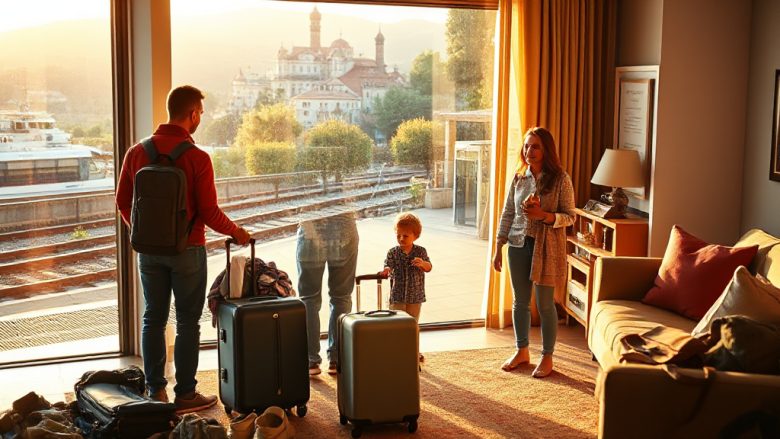
Family travel is one of those things that looks magical in photos and feels chaotic in real life. Someone loses a shoe. Someone else refuses to eat anything that isn’t beige. The toddler has a meltdown at the exact moment you need to board. None of this means you’re doing it wrong. It means you’re traveling with children, which is a fundamentally different activity from traveling as an adult. The good news is that most of the stress families experience on vacation is predictable, and predictable problems can be planned around. Knowing the common family travel mistakes to avoid won’t make your trip perfect, but it will keep the avoidable disasters off the itinerary.
Overpacking the Schedule Instead of the Suitcase
First-time family travelers often make the same assumption: more destinations equals more value. Three cities in five days sounds efficient until you factor in nap schedules, snack breaks, and the forty-five minutes it takes to get everyone out of a hotel room. What you end up with is a blur of transit and a family that’s too exhausted to enjoy anything.
A better approach is to pick one base and treat day trips as optional extras. If you’re visiting a region, choose a town that’s central and stay put. Kids thrive on routine, and a stable home base means mornings start calmly and evenings end without a frantic repack. You’ll see less on paper and remember more in practice. The families who come home raving about their trip are usually the ones who did fewer things and lingered longer at each one.
It also helps to build in what I call a nothing day. One day with no plans, no tickets, no reservations. Let the kids swim, let everyone sleep in, and let the trip breathe. You’ll be surprised how much this single day rescues the rest of the vacation.
Booking Accommodation Without Checking the Practical Details
A hotel can look perfect in photos and still be wrong for a family. The pool is beautiful, but the room has no fridge for milk. The location is central, but the nearest restaurant doesn’t open until noon. The suite is spacious, but it’s on the fourth floor with no lift and you have a pushchair.
Before you book, run through a short mental checklist. Is there a kitchenette or at least a kettle and fridge? How far is the nearest shop? Is there a lift? Are there laundry facilities, because someone will spill something on day two. Does the room have blackout curtains, and is there a separate sleeping area so you can stay up after the kids go down?
These details matter more than décor. A slightly less stylish apartment with a washing machine and a corner shop nearby will beat a boutique hotel every time when you’re traveling with children. Read recent reviews specifically for mentions of noise, cleanliness, and family facilities, and don’t rely on the marketing photos alone.
Ignoring Jet Lag and Time Zone Changes
Adults can push through jet lag with coffee and willpower. Children cannot. A tired child is not a flexible child, and a badly timed time zone shift can turn the first three days of your trip into a grumpy standoff.
Plan around the shift rather than pretending it won’t happen. If you’re crossing several time zones, try to arrive in the late afternoon or early evening local time. Keep everyone awake on the flight as much as you reasonably can, then get outside into daylight on arrival. Natural light is the strongest signal your body has for resetting its clock.
For the first day, keep expectations low. A short walk, a meal, and an early night. Don’t schedule a major attraction for the morning after a long-haul flight. If you’re traveling east, the mornings will be brutal for a few days, so have a plan for early risers: a nearby park, a bakery that opens early, or simply a room where you can make tea without waking everyone else.
Underestimating Food and Snack Logistics
Hunger is the single most reliable trigger for family meltdowns, and it’s also the easiest to prevent. Yet plenty of families set off each morning with nothing but a vague plan to find somewhere for lunch, then spend an hour wandering while everyone gets progressively more miserable.
Carry more snacks than you think you need. Nuts, crackers, fruit, cereal bars, whatever your family actually eats. Keep a refillable water bottle for each person and top them up whenever you can. If your child has allergies or dietary needs, research suitable restaurants in advance and note a couple of backups, because the place you planned to eat will sometimes be closed.
Don’t schedule dinner at a child’s breaking point. If your kids eat at six at home, booking a table for eight on holiday is asking for trouble. Eat earlier, even if it feels unfashionably early, and you’ll have a far more pleasant evening. Many family-friendly restaurants are quieter at five-thirty anyway.
Forgetting That Downtime Is Part of the Trip
There’s a temptation to treat a vacation as a checklist. See the museum, climb the tower, visit the market, catch the sunset. But children don’t experience travel as a series of sights. They experience it as a series of moods, and those moods need rest to stay pleasant.
Build in downtime every single day, not just when someone’s about to crack. An hour back at the accommodation in the afternoon can reset the whole evening. A slow morning with breakfast in the room can be the difference between a fun day and a forced march.
This is also true for teenagers. They may not need a nap, but they do need time to decompress without an audience. Give everyone a bit of space each day, whether that’s a book in the corner or a walk to the shop alone. A family trip works best when it isn’t a twenty-four-hour group activity.
Skipping Travel Insurance and Health Preparation
It’s boring advice, and it’s the advice people most regret ignoring. Family travel involves more people, more variables, and more chances for something to go wrong. A sprained ankle, a stomach bug, a lost bag, a cancelled flight. None of these are dramatic, but any of them can become expensive without cover.
Get insurance that actually covers the ages of your children and any activities you’re planning. Check whether it includes medical treatment abroad, repatriation, and cancellation. If anyone in the family has a long-term condition, make sure prescriptions are packed in hand luggage with a copy of the prescription, and check the rules for carrying medication into your destination.
It’s also worth knowing where the nearest clinic or hospital is at each stop. You’ll almost certainly never need it. But knowing it’s there takes a small weight off your mind, and that matters when you’re responsible for other people’s health in an unfamiliar place.
Packing Too Much and Forgetting the Essentials
Most families pack for the trip they imagine and not the trip they’ll actually take. Four pairs of shoes for a five-day break. Formal outfits that never leave the suitcase. A stack of toys that gets ignored in favour of a stick found on the beach.
Pack less clothing and plan to do a wash. Choose layers over bulk, and check the weather forecast for the actual week rather than the season. Roll clothes to save space, and put each child’s outfits into separate packing cubes so you’re not digging through a shared bag at seven in the morning.
Then there’s the other half of the problem: the essentials people forget. Spare chargers and a power bank. A basic first aid kit with plasters, pain relief, and rehydration sachets. Sun cream and hats. A light rain jacket, even in summer. A small bag you can carry for day trips that holds water, snacks, and a change of clothes for younger children. And something to keep kids occupied during waits, because there will be waits.
One short list is worth keeping on your phone, updated after every trip. It’s the fastest way to stop repeating the same packing mistakes year after year.
Final Thoughts on Smoother Family Trips
The common family travel mistakes to avoid aren’t dramatic. They’re small, ordinary oversights that pile up: too much on the schedule, not enough snacks, no room for rest, no plan for the practical stuff. Fix those, and the trip becomes what it was supposed to be in the first place. Not flawless, but genuinely enjoyable.
Start with one change. Build in a nothing day. Carry more water. Book the apartment with the washing machine. Eat dinner at five-thirty. None of it is glamorous, and all of it works. The best family holidays aren’t the ones with the fullest itineraries. They’re the ones where everyone comes home tired, happy, and already talking about next time.