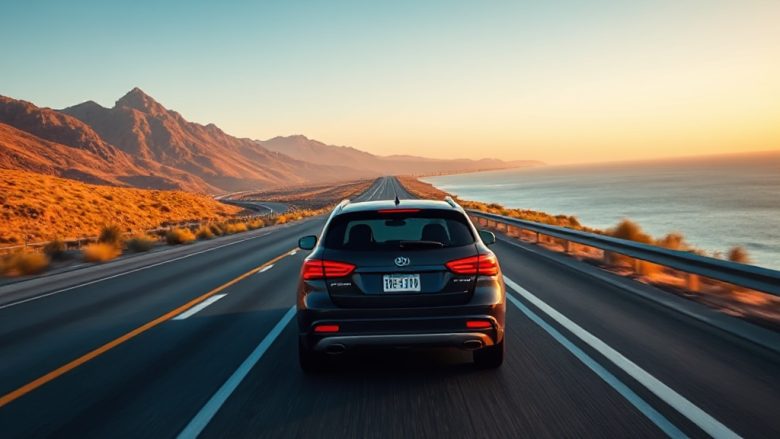
Road trips have a permanent spot in the travel imagination. The open road, a packed car, a playlist nobody fully agrees on, and the freedom to stop wherever something interesting appears. For a lot of travellers, driving yourself somewhere is more appealing than squeezing into an airport queue or waiting on a delayed train. But anyone deciding between a road trip and another way of getting from A to B should look at the practical side before committing. That is what road trips pros and cons explained properly actually means: not a romantic pitch, but a clear-eyed look at cost, comfort, time, and stress. This article walks through the real advantages and the genuine drawbacks so you can judge whether a road trip suits your next trip.
The Pros of Road Trips
The strongest argument for a road trip is control. You decide when the journey starts, where it pauses, and how long each leg lasts. That flexibility changes the whole character of a holiday. A train timetable or a flight schedule forces you into someone else’s rhythm. A car lets you build your own.
Freedom and flexibility. If you wake up somewhere and decide to stay an extra day, you can. If a sign points to a viewpoint you had never heard of, you can follow it. Detours become part of the trip rather than a problem. This is the single biggest reason people choose to drive: the itinerary bends around your mood instead of the other way around.
Cost control on the road. A road trip can be surprisingly affordable, especially for groups. One car carrying four people splits fuel and tolls four ways. Compare that with four train tickets or four flights, and the maths often favours driving. You also avoid baggage fees, seat selection charges, and the small fortune spent on airport food. Accommodation can be adjusted too: camping, hostels, or a cheaper motel outside the city centre all become realistic options when you have a car.
You see the places in between. Flying compresses a journey into a blank stretch of time between two airports. Driving fills that stretch with landscape, small towns, roadside diners, and the slow change from one region to another. For anyone who enjoys the journey as much as the destination, this is the whole point. You arrive knowing more about the country you crossed than any flight could teach you.
Practical for certain trips. Some destinations are simply easier by car. National parks, coastal routes, rural villages, and anywhere with weak public transport reward a driver. Carrying camping gear, bikes, or a surfboard is far simpler when the vehicle is yours. Travelling with young children also tends to be less painful by car, because you can stop when they need a break rather than when the airline says so.
Privacy and comfort on your terms. Nobody reclines a seat into your knees. You can talk, sing, eat, and rest without an audience. For introverts or anyone who finds crowded transport exhausting, a car offers a private bubble that makes long journeys far more bearable.
There is also a social benefit that is easy to underestimate. A road trip puts people in a shared space for hours. Conversations happen that would never occur over a meal. Friendships and family relationships often come out stronger on the other side, even after the inevitable argument about navigation.
The Cons of Road Trips
None of that makes road trips easy. The drawbacks are real, and ignoring them is how a dream trip turns into a chore. Understanding them in advance is what separates a good road trip from a regrettable one.
Driver fatigue is the hidden cost. Long hours behind the wheel are tiring in a way passengers rarely appreciate. Concentration fades, reactions slow, and the risk of an accident climbs. A trip that looks manageable on a map can become dangerous by the fourth hour. Sharing the driving helps, but not everyone is willing or able. Solo drivers face the toughest version of this problem.
Time is often underestimated. Driving distances take longer than the numbers suggest. Traffic, roadworks, weather, and the simple need for breaks all add up. A route that maps to six hours can easily become nine. That eats into the time you actually wanted to spend at your destination. If your holiday is short, a road trip can spend most of it in transit.
Costs add up quietly. Fuel is only the beginning. Tolls, parking, overnight stops, and wear on the vehicle all count. Parking in cities can be painfully expensive, and some accommodation charges extra for a car. If something goes wrong mechanically, the bill can dwarf any savings on tickets. The cheap road trip is a possibility, not a guarantee.
Stress and logistics. Someone has to plan the route, book the stops, and keep everyone fed. Navigation arguments are a cliché because they happen. Traffic jams, wrong turns, and finding parking in an unfamiliar city all chip away at the enjoyment. Passengers relax; drivers usually do not.
Comfort and space limits. Cars are cramped over long distances. Legs stiffen, backs ache, and luggage space runs out fast. Unlike a train, there is no walking to a buffet car or stretching out in a seat. Children get restless, adults get irritable, and the playlist becomes a diplomatic crisis.
Safety and breakdowns. Breakdowns in remote areas are inconvenient at best and frightening at worst. Weather can close roads entirely. Driving in an unfamiliar country with different rules, signs, and side of the road adds another layer of risk. Night driving on unknown roads is genuinely dangerous, and it is easy to end up doing it because you misjudged the day’s distance.
Environmental impact. A car full of people is reasonably efficient per person, but a car with one or two occupants is one of the least green ways to travel. For anyone trying to reduce their footprint, this matters and should be weighed honestly against the convenience.
How to Decide If a Road Trip Is Right for You
The decision usually comes down to a few honest questions. How much time do you actually have? A road trip rewards people with flexibility and patience. If your trip is a long weekend, driving may cost you more time than it saves. If you have a fortnight and no fixed schedule, it can be the best way to travel.
How many drivers do you have? Two or more makes a huge difference. Solo driving over long distances is a genuine safety concern, not just a discomfort. Be realistic about how many hours each person can safely manage.
What kind of destination are you heading to? Cities with good public transport often punish drivers with parking costs and congestion charges. Rural areas, coastlines, and national parks usually reward them. Match the transport to the place, not the other way around.
What is your budget really? Add up fuel, tolls, parking, and accommodation with a car, then compare it with the alternatives. Include a buffer for repairs. A road trip is not automatically the cheap option, and it is not automatically the expensive one either.
How well does your group travel together? Hours in a confined space reveal a lot. If your companions handle delays and disagreements well, a road trip can be a highlight. If not, a train journey with separate seats might preserve the friendship.
It also helps to plan the shape of the trip rather than just the route. Some people thrive on a loose plan with room for improvisation. Others need booked stops and a daily target. Neither approach is wrong, but mismatched expectations between travellers cause most of the friction. Agree in advance on how far you will drive each day, who pays for what, and how decisions get made when the plan falls apart. It will fall apart at some point, and that is fine as long as nobody is surprised.
Finally, think about what you actually want from the trip. If the goal is to arrive somewhere fast and relax, flying or taking the train is usually better. If the goal is the journey itself, the places between, and the freedom to change your mind, a road trip is hard to beat. The honest answer to whether it is worth it depends less on the road and more on what you are hoping to get from it. Weigh the pros and cons against your own priorities, and the right choice becomes much clearer.