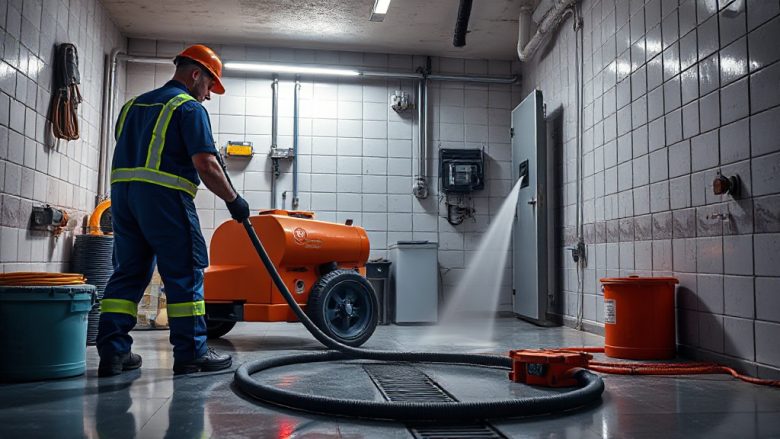
Garage and Laundry Floor Drains in Itatiba: Why They Back Up
Your garage floor drain is backing up again, and the laundry sink next to it drains fine. That contradiction is the first clue: a floor drain is not a sink. A sink has a trap and a short branch line; a floor drain sits at the low point of a slab, often sharing a line with the washing machine, water softener, and storm runoff. When it backs up, the problem is usually downstream, not at the grate.
If you are searching for a desentupidora em Curitiba PR, the same logic applies to any low-point drain in a home, garage, or utility room. The goal is to identify what is actually blocking the line before someone snakes the wrong fixture.
Why a Floor Drain Behaves Differently From a Sink
A sink drain carries mostly soapy water and small food particles. A floor drain carries whatever lands on the slab: grit, laundry lint, pet hair, mop water, and sometimes rainwater from a garage apron. That mix is heavier and more abrasive, so it settles instead of flowing away. Over time, the bottom of the pipe fills with a dense sludge that water can pass over but not push through.
Floor drains also have a shallow trap that is easy to clog at the inlet. Many garage drains have a cast-iron or plastic grate with small slots that catch debris before it reaches the pipe. When the grate is clear but the drain still gurgles, the blockage has moved into the branch line or the main stack.
Shared lines and backflow
In many Itatiba homes, the laundry standpipe and the floor drain connect to the same branch. When the washing machine discharges, it sends a sudden surge of water into a line that may already be partially blocked. That is why the floor drain backs up during a spin cycle but looks normal an hour later. The drain is not the source; it is the weakest point in a shared line.
Another difference is slope. Floor drains rely on a gentle fall to the main line. If the slab settled or the pipe was installed with a flat section, water sits in the low spot and solids drop out. A sink drain rarely has this problem because it drops vertically before turning.
What Usually Causes the Backup
Most garage and laundry floor drain backups fall into a few predictable categories. Knowing which one you have changes what needs to be done.
- Lint and detergent residue from the washing machine form a felt-like mat inside the pipe.
- Grit and sand washed off a garage floor settle in the trap and harden.
- Root intrusion at a joint outside the slab, especially in older properties with clay or cast-iron lines.
- Grease or soap scum from a utility sink that drains into the same branch.
- Collapsed or offset pipe caused by soil movement or age.
If the drain backs up only when the washing machine runs, the blockage is likely between the standpipe and the main line. If it backs up after rain, the problem may be a surcharged main or a broken line under the slab.
What to do before you call
First, stop using the fixture. Running more water adds pressure and can push waste into other drains. Remove the grate and clear any visible hair or lint with gloves and a bag. Do not pour chemical drain cleaner into a floor drain: it can damage older pipes and rarely reaches a blockage that has settled in a horizontal run.
Check whether other fixtures are slow. If the toilet or shower also gurgles, the blockage is in the main line and needs professional equipment. If only the floor drain is affected, a hand auger may reach a nearby clog, but a cable that is too short will just poke a hole in the sludge and the backup will return.
For a persistent backup in a garage or laundry area, a desentupidora Curitiba team can camera the line and confirm whether the issue is grease, roots, or a broken pipe before any work begins. That step prevents repeat visits and unnecessary digging.
When to Call a Professional
Call a professional when the drain backs up more than once in a month, when water rises in other fixtures, or when you notice a sewage smell that does not clear. These signs point to a main-line problem rather than a local clog. A technician will typically start with a camera inspection, then use a drain snake or hydrojetting to clear the line.
Hydrojetting is often the right choice for laundry and garage drains because it scours the pipe walls instead of just punching a hole through the clog. For older cast-iron lines, the technician will adjust pressure to avoid damage. If the camera shows a collapsed section, the repair may require excavation, and a clear diagnosis saves you from paying for repeated clearing.
If you manage a property and need a desentupidora Curitiba PR service that handles emergency calls, ask whether they camera the line and provide a written report. That record helps you decide between maintenance and replacement.
Preventing the next backup
Install a lint trap on the washing machine discharge hose and clean the floor drain grate monthly. Avoid pouring mop water with heavy grit into the drain; sweep or vacuum the garage floor first. If the drain has a removable strainer, keep it in place. These small habits reduce the solids that settle in the trap and extend the time between professional cleanings.
Frequently Asked Questions
Why does my garage floor drain back up only when it rains?
Rainwater may be entering the same line through a broken pipe or an illegal connection. When the main line is already partially blocked, the added flow backs up at the lowest point, which is usually the garage drain.
Can I use a plunger on a floor drain?
A plunger works only if the blockage is close to the grate and the trap is full of water. For a floor drain, the trap is shallow and the clog is often farther down the branch, so a plunger usually just moves the water around.
How do I know if the problem is in my drain or the main sewer line?
If other fixtures in the house drain slowly or gurgle at the same time, the blockage is likely in the main line. If only the floor drain is affected, the clog is probably in the branch serving that area.